
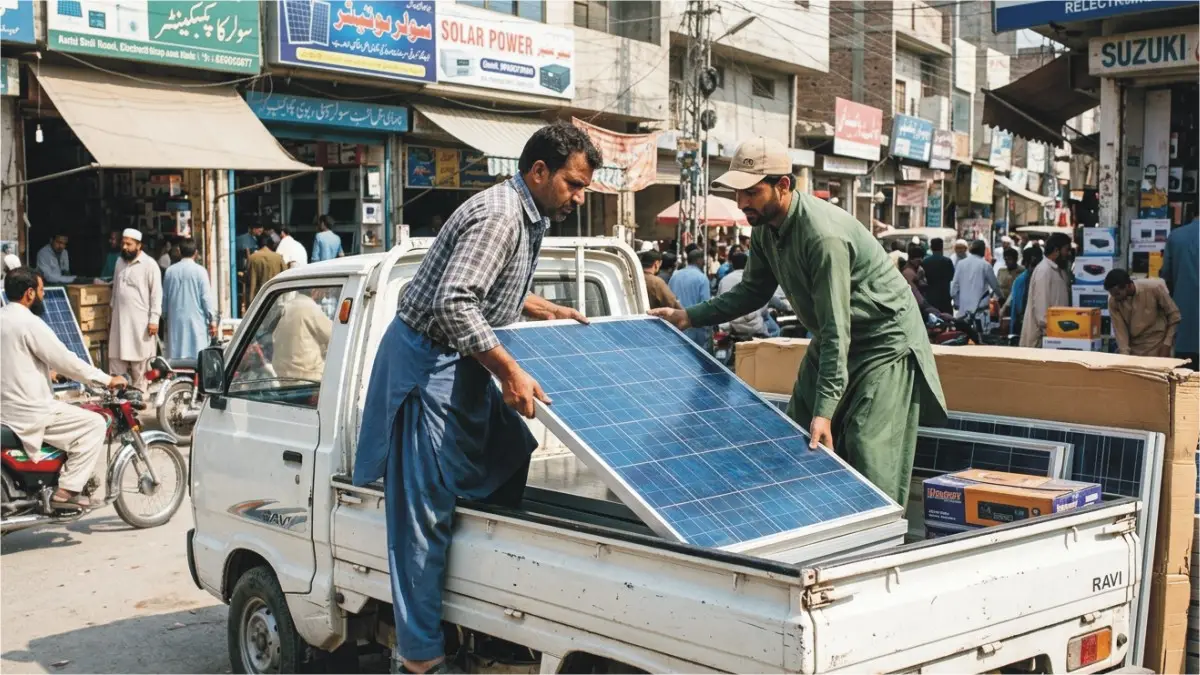
The Sindh Government has officially launched its massive Solar Home Systems (SHS) Project, providing 275,000 free solar kits to low-income households across four key districts. This initiative, executed by the Sindh Energy Department and SRSO, aims to eliminate energy poverty and reduce the national grid’s burden starting April 2026.
The “Pulse” Analysis
As of mid April 2026, Pakistan’s energy sector stands at a crossroads. With international fuel prices fluctuating and the national grid struggling under the weight of “circular debt,” the Sindh Government’s rollout of 275,000 solar units is not just a social welfare project; it is a strategic economic intervention. By decentralizing power for the most vulnerable “protected consumers,” the state is effectively reducing the long-term subsidy burden that has historically crippled the national exchequer.
The current rollout focuses on four specific districts: Khairpur, Larkana, Qambar Shahdadkot, and Shikarpur. However, the implications of this project reach far beyond these borders.
- Targeted Distribution: The project is surgically divided into two categories. Approximately 132,000 kits are allocated for “off-grid” areas, regions where the national power lines have never reached. The remaining 143,000 kits are for “on-grid” households that are connected but cannot afford the rising electricity tariffs.
- The Lithium Standard: In a significant technological departure from previous years, these kits utilize 50 Ah lithium-ion batteries instead of traditional lead-acid ones. Lithium batteries offer a 5-to-10-year lifespan compared to the 18-month life of lead-acid, ensuring that this is a sustainable long-term solution rather than a temporary political fix.
- Grassroots Implementation: The Sindh Rural Support Organisation (SRSO) has been tasked with the physical distribution. This use of a non-governmental, rural-focused partner is designed to bypass traditional bureaucratic delays and ensure that kits reach the verified “poorest of the poor” registered under the Benazir Income Support Programme (BISP).
- Capacity Breakdown: Each household receives a 180-watt monocrystalline solar panel, which is optimized for high-heat environments like Upper Sindh. The package includes three high-efficiency LED lights, a DC fan, and a mobile charging station, covering 90% of a rural household’s basic energy needs.
Why It Matters: The Socio-Economic Impact
The “Why” behind this project is simple: electricity in Pakistan has become a luxury. For a laborer in Shikarpur earning Rs. 25,000 a month, an electricity bill of Rs. 5,000 is a catastrophe. By providing “Free Watts,” the government is essentially giving these families a monthly “income boost” by eliminating their basic lighting and cooling costs. Furthermore, by moving 275,000 families to solar, the government reduces the demand for subsidized power, which in turn helps stabilize the national grid for industrial users.
Regional Significance: Why Upper Sindh?
The decision to launch this phase in Khairpur, Larkana, Qambar Shahdadkot, and Shikarpur is rooted in climate data. These districts are part of Pakistan’s “Heat Belt.” During the summer months, temperatures here regularly exceed 48°C. In these conditions, a fan is not a comfort item; it is a medical necessity.
- Climate Resilience: These districts are prone to extreme weather events. During the 2022 floods and subsequent heatwaves, grid infrastructure in these areas was the first to fail. A decentralized solar unit ensures that even if the main grid collapses, a family still has light and the ability to charge a phone for emergency communication.
- Economic Uplift: By targeting the agricultural heartland of Sindh, the project allows small-scale farmers to spend less on household energy and more on seeds, fertilizers, and modern farming tools.
- Educational Impact: Investigative data shows that student performance in rural Sindh drops significantly during “load-shedding” hours. The provision of three LED lights per household specifically targets the ability of children to study after sunset, potentially altering the educational trajectory of an entire generation.
Expert Insight: Fact-Checking the 2026 Solar Specs
At The Pak Pulse, we have compared the Sindh SHS kits against the market standards and the ongoing Punjab Solar Scheme to provide an objective assessment of the value being delivered.
Is the 180-Watt Panel Enough?
For a household using only the provided DC fan and three LED lights, a 180-watt panel is more than sufficient. Under the intense sun of Upper Sindh, this panel can fully charge a 50 Ah lithium battery in approximately 4 to 5 hours. This allows the family to have 10 to 12 hours of backup power at night. However, it is important to note that this system cannot run a television, air cooler, or refrigerator.
The Comparison: Sindh vs. Punjab Solar Models
While the Punjab government has focused on a “loan-plus-subsidy” model for 1kW to 3kW systems for the middle class, the Sindh model is a 100% Grant for the lowest income tier. This makes the Sindh scheme more effective at immediate poverty alleviation, while the Punjab scheme is better for long-term grid-tied solar adoption for urban homeowners.
The “Maintenance Gap”
The biggest threat to this project is not the technology, but “dust accumulation.” In the dusty plains of Qambar Shahdadkot, a solar panel’s efficiency can drop by 30% in just one week if not cleaned. The government must provide basic maintenance training to ensure these systems don’t become “electronic waste” by 2027.
Step-by-Step Guide: How to Secure and Maintain Your Solar Kit
If you are a resident of the four designated districts, follow this guide to ensure you benefit from the 2026 rollout.
- Verification of BISP Status
The primary filter for this scheme is the BISP (Benazir Income Support Programme) database. Ensure your household is registered and your “Poverty Score” is updated. Households with the lowest scores are prioritized in the first wave of distribution. - Contacting the SRSO Field Office
The Sindh Rural Support Organisation (SRSO) manages the distribution. Do not wait for a knock on your door. Visit your local Union Council office or SRSO district center to check if your name is on the preliminary list of 275,000 beneficiaries. - Documentation Requirements
You will need:
- Original CNIC of the head of the household.
- BISP registration card or proof of enrollment.
Proof of residence (such as a local domicile or verified rental agreement).
- Installation Best Practices
Angle: The solar panel must face South to capture the maximum amount of sunlight throughout the day.
- Cleaning: Use a soft, damp cloth to wipe the panel every two days. Do not use harsh chemicals.
- Battery Care: Keep the lithium battery box in a cool, ventilated area inside the house. Do not leave it in direct sunlight.
Conclusion
The Sindh Solar Home Systems Project is a landmark moment for 2026. It represents a shift away from expensive, centralized fossil fuel power toward a future where every rooftop in Pakistan is a mini-power plant. While the challenges of maintenance and political transparency remain, the immediate relief provided to 275,000 families is an undeniable victory for the province’s most vulnerable citizens. At The Pak Pulse, we will continue to monitor the distribution to ensure that every “Free Watt” promised actually reaches a home in need.

 By
By