
A Gift for the Laborers in Pakistan on May 1.
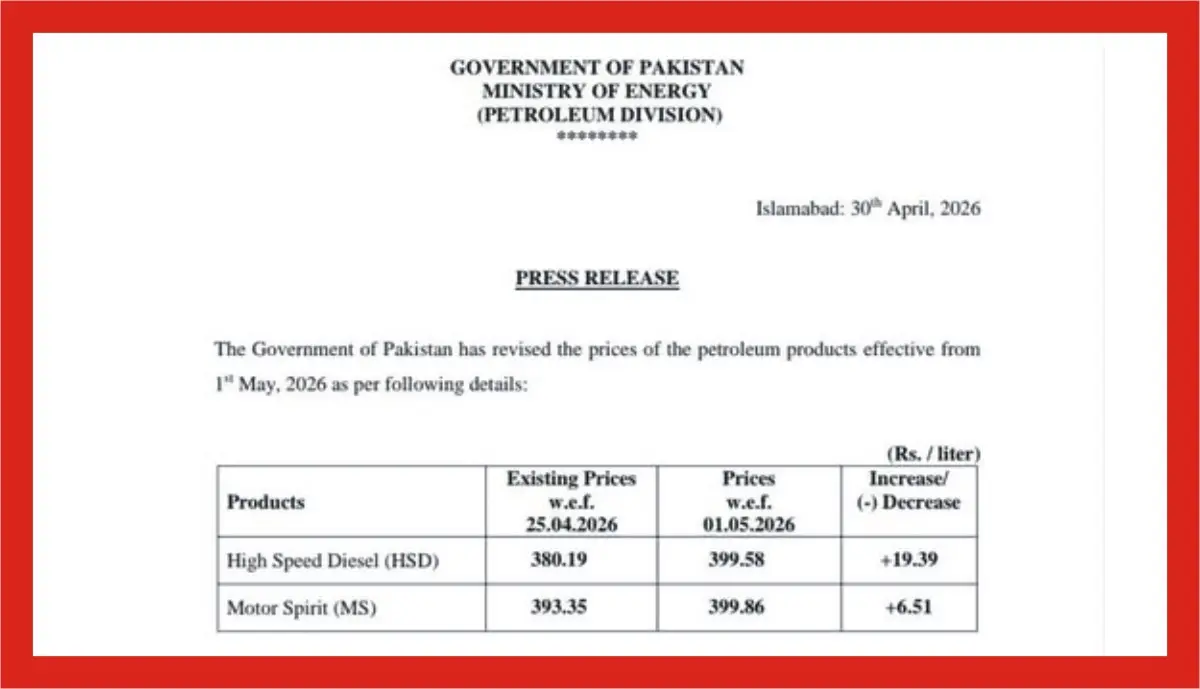
The morning of May 1, 2026, was supposed to be a day of rest and respect for the working class in Pakistan. Instead, millions of workers woke up to a historic “fuel shock.” While the government officially set the new prices of petrol and diesel just below the 400 rupee mark, the reality on the streets is much more difficult.
Ground reports from major cities like Karachi, Lahore, and Peshawar show that many petrol pumps are selling fuel at between Rs.401 to Rs.403 per liter. This gap between official announcements and the actual price at the pump has created a wave of frustration among laborers and daily wage earners.
For many, this is seen as a “bitter gift” on International Labor Day. The psychological barrier of 400 rupees has finally been broken. Even though the official notification lists petrol at Rs 399.86, the extra few rupees charged at the station make a big difference for someone earning a minimum wage.
When a worker has to pay over 400 rupees for a single liter, it directly reduces the money they have for food, rent, and medicine. This situation has turned a day of celebration into a day of financial stress for the backbone of the country.
The Gap Between Official Prices and Ground Reality
There is a clear difference between what the government announces and what the citizen pays. Officially, the prices for petrol and high-speed diesel were increased to stay just under 400 rupees to avoid a massive public reaction.
However, in the real market, several factors drive the price higher. In many remote areas or cities far from oil depots, “transportation charges” are added to the bill. Furthermore, some pump owners claim that their “dealer commission” or operation costs force them to round up the price. This means that while the news says 399, the common man’s pocket feels the weight of 403.
In many parts of the country, citizens have reported that pumps are not just rounding up the price but are also facing supply shortages. This leads to long queues where desperate riders are willing to pay the extra 2 or 3 rupees just to get enough fuel to reach their jobs. This lack of price control is a major concern for the public.
They feel that the government’s official rates are only on paper, while the “ground reality” is governed by the pump owners. For a laborer who relies on a motorcycle to earn a living, these extra rupees added to an already record-high price are an unfair burden.
The government has stated that the increase is necessary due to the Middle East crisis and the rising cost of imports. Currently, shipping through the Strait of Hormuz is dangerous and expensive. This has pushed Pakistan’s oil import bill to over $800 million.
At the same time, the country must follow the rules of the International Monetary Fund (IMF) to keep taxes high. However, for the man on the street, these global reasons do not explain why they are being charged more than the official government rate at the local pump.
Why the 400 Rupee Barrier Changes Everything
Breaking the 400 rupee mark is a major turning point for the Pakistani economy. Fuel is the “mother of all prices.” When the cost of diesel and petrol rises, every other service follows. Public transport owners have already started increasing fares, with some routes seeing a jump of 20 to 50 rupees.
For a worker who takes two buses to reach a factory, this means their monthly transport budget has suddenly doubled. This is why the “ground reality” of Rs 403 is so dangerous; it triggers a fast increase in the cost of everything else.
Farmers are also worried. Diesel is used to run tractors and water pumps. As the price at the pump hits 401 or 403 rupees, the cost of growing wheat and vegetables increases. This cost will eventually reach the kitchen of the common man in the form of more expensive flour and pulses.
Economists warn that this “Labor Day gift” will lead to a new wave of inflation that could last for months. The working class, which May 1 is meant to protect, is the group that will suffer the most from this change.
Navigating the Crisis and Seeking Relief
In response to the public outcry, the government has mentioned some relief measures, but they seem small compared to the problem. The petrol subsidy for motorcyclists has been extended, which provides a discount of Rs 100 per liter for registered users.
There is also a plan to introduce more “Sasta” bus services in the big cities. While these steps are welcome, they do not help the millions of people in small towns where such services do not exist. For those people, the only reality is the high price at the local petrol station.

 By
By